Imagining Futures Project Update: Race to Resilience Culture
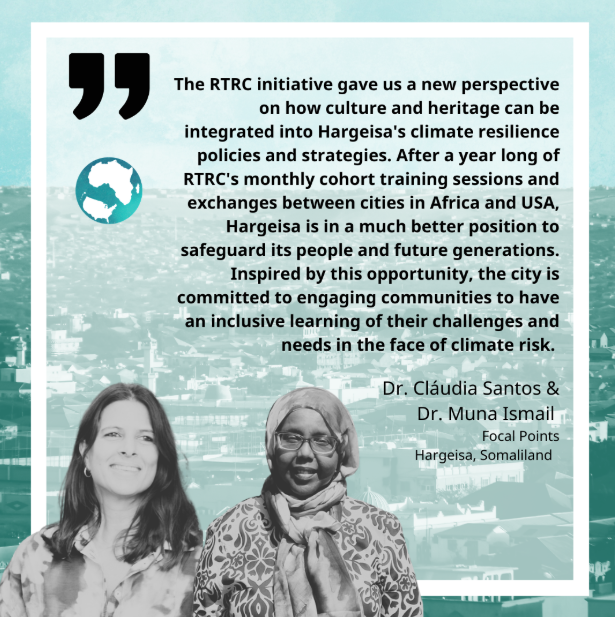
On 1 April 2026, the inaugural Race to Resilience Culture (RTRC) cohort gathered for its final session, marking the close of a groundbreaking program that brought together cities across Africa and the United States to explore the intersection of culture, heritage, and climate resilience. Facilitated by ICLEI USA and ICLEI Africa, the cohort covered 12 topics during virtual zoom calls — from community engagement and nature-based solutions to mental health and the built environment — featured 20 external subject matter experts, and over 30 peer exchange meetings over the course of 1 year. Highlights included a Virtual Artist Exchange between San Jose, California and uMhlathuze, South Africa, and tangible city-level outcomes such as Hargeisa's Impact Risk and Vulnerability Assessment, Msunduzi embedding culture into its Climate Action Plan, and Blaine County developing a Climate Risk and Vulnerability Assessment, among others.
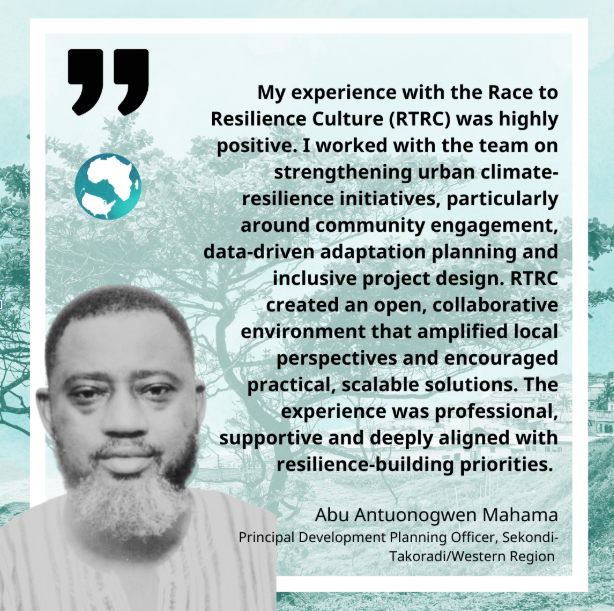
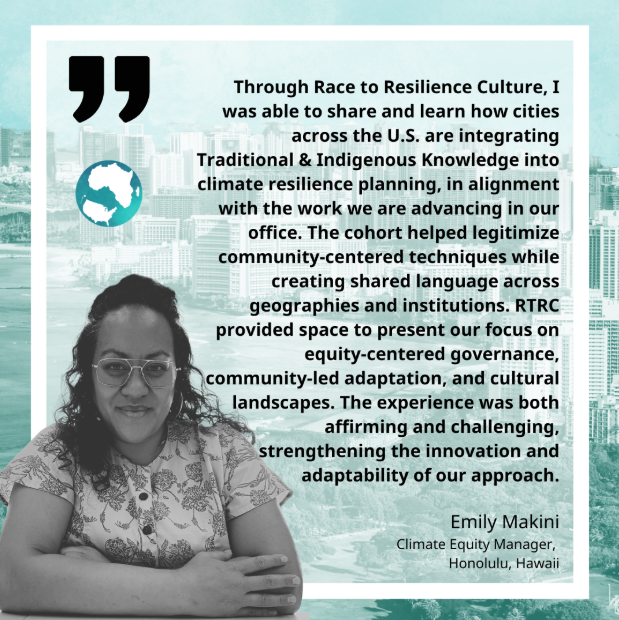
Participants left the program with a deepened understanding of culture as an essential, not optional, driver of climate resilience. Many shared how the cohort shifted their thinking in concrete ways: recognizing that indigenous knowledge and traditional practices are powerful climate responses, that tools like photovoice can make climate issues tangible and culturally resonant, and that art and storytelling are critical communication tools for community engagement. Participants also expressed a strong appetite for more — more peer exchange, more breakout sessions, and ideally in-person connection opportunities.
Looking ahead, the RTRC Academy will welcome 30 new cities and counties through the same curriculum, with four joint sessions connecting the new cohort with African and U.S. peers, and a bonus session on the Food-Culture-Climate Nexus. The relationships and commitments built through this inaugural cohort will continue to shape culture-based climate action well beyond its formal close.